Kitchen Mosaic Tiles: Ideas,
Practicality and Style Tips
Mosaic tiles are one of the simplest ways to add character and lasting style to a kitchen. Whether you are renovating a Victorian terrace, fitting out a new-build, or simply refreshing a tired splashback, kitchen mosaic tiles offer a combination of visual richness, material durability and creative freedom that is hard to match with any other surface finish.
This guide covers everything you need to know: from choosing the right material and layout for your kitchen, to keeping your tiles looking pristine for years to come.
Key Takeaways
-
Glass, ceramic, and natural stone are the main material options, each with different looks, price points and maintenance needs.
-
The splashback is the most popular spot for kitchen mosaic tiles, but full-height walls, upstands, and statement areas behind the hob are all worth considering.
-
Layout matters as much as tile choice: brick bond, herringbone and diagonal grids each create a very different feel from the same tile.
-
Grout colour and type have a big impact on both appearance and long-term upkeep; epoxy grout is the lowest-maintenance option for kitchens.
-
Day-to-day cleaning is straightforward: a damp microfibre cloth and mild spray are usually all you need for glass and glazed ceramic mosaics.
Why Mosaic Tiles Work So Well in Kitchens
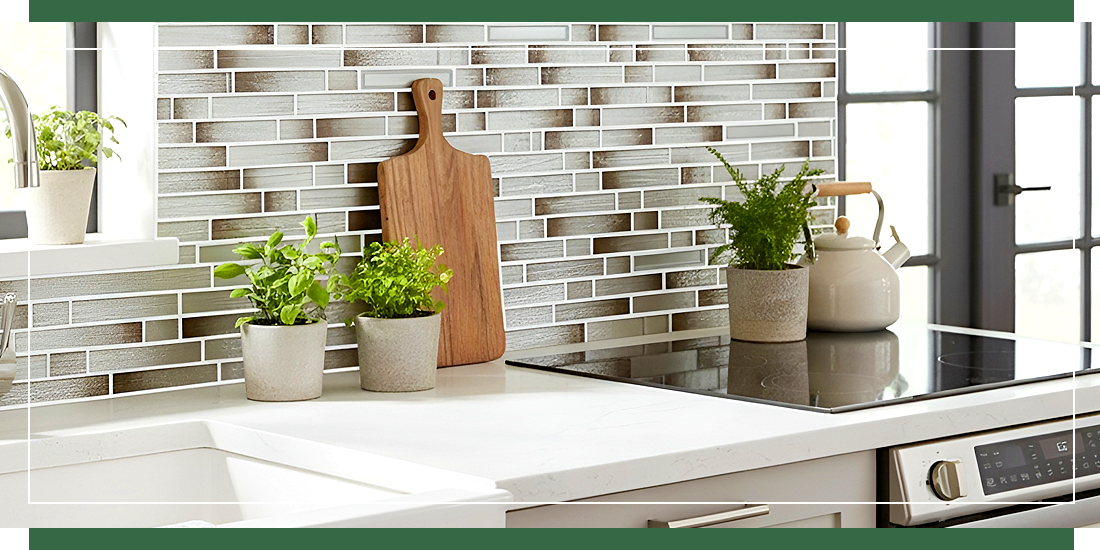
The kitchen is one of the most demanding rooms in the home. Surfaces face heat from hobs, steam from boiling pots, splashes from food preparation and daily cleaning cycles. Mosaic tiles are inherently well-suited to these conditions. Here is why.
Heat and Moisture Resistance
Kitchens generate more heat and steam than almost any other room. Glass and porcelain mosaic tiles are non-porous and thermally stable, so they will not warp, blister or absorb moisture the way painted surfaces or wallpaper can. This makes them a reliable long-term choice for splashbacks behind hobs and around sinks.
Easy to Clean
The smooth, non-porous surface of glass and glazed ceramic mosaics means grease, food splashes and cooking stains can usually be wiped away with a damp cloth and a mild spray. Compared to grouted natural stone or textured paint finishes, the day-to-day upkeep is minimal.
Adaptability to Awkward Spaces
Because each individual tile is small (typically between 2 cm and 5 cm square, though sizes vary widely), mosaic sheets can flex slightly during installation to follow curves, alcoves and uneven walls that would defeat a larger format tile. This adaptability makes them ideal for the irregular geometry often found around range cookers, extractor hoods and butler sinks.
Light and Depth
The fine grout lines characteristic of mosaic work create a texture and depth that solid, large-format tiles simply cannot replicate. Light catches dozens of small surfaces simultaneously, giving a kitchen wall a luminosity that changes subtly throughout the day, particularly useful in smaller or north-facing kitchens.
Design Flexibility
Mosaic tiles come in a vast range of materials, colours and finishes, so they can be tailored to virtually any kitchen style from a minimal white grid in a modern flat to a rich, hand-cut pattern in a period home. You can tile an entire wall or limit yourself to a narrow splashback; the small tile format makes it easy to scale the project to your budget and ambition.
Durability
A well-installed mosaic surface will comfortably last 20 years or more with only basic maintenance. Unlike paint, which chips and yellows, or acrylic splashback panels, which can discolour over time, quality mosaic tiles retain their colour and finish indefinitely.
What is the Best Tile Material For Kitchens?
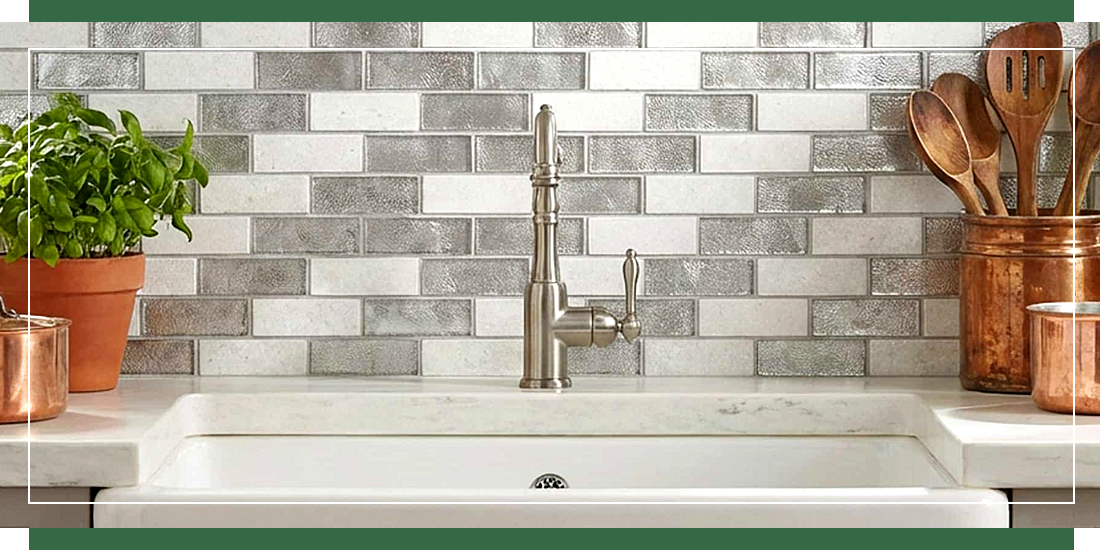
The material you choose will define not only the look of your kitchen mosaic tiles but also their long-term performance. Here are the most popular options and their practical implications.
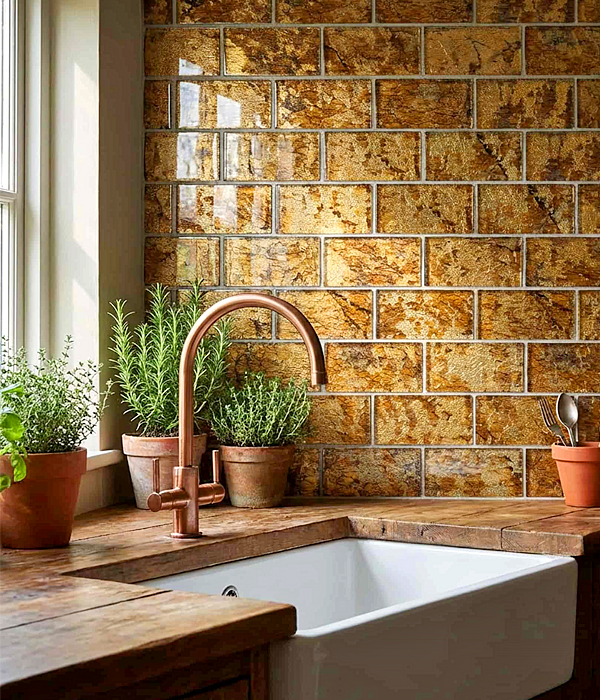
Glass Kitchen Mosaics
Glass is a popular choice for kitchen splashbacks in the UK, and for good reason. It is non-porous, which means it does not absorb cooking oils, steam or food pigments. A wipe with a damp cloth is usually sufficient to restore the surface. Glass also reflects light beautifully, making it an excellent choice for smaller kitchens or north-facing rooms where natural light is limited.
Colour consistency is another advantage of glass mosaics. Unlike natural stone, glass mosaic tiles are manufactured to precise colour tolerances, so you can order additional tiles months later and expect a reliable match.
From a design perspective, glass mosaics are one of the most versatile options available. They come in an exceptionally wide colour palette, from subtle neutrals to vivid jewel tones, and can be found in glossy, frosted or iridescent finishes, making it easy to match or contrast with virtually any kitchen scheme.
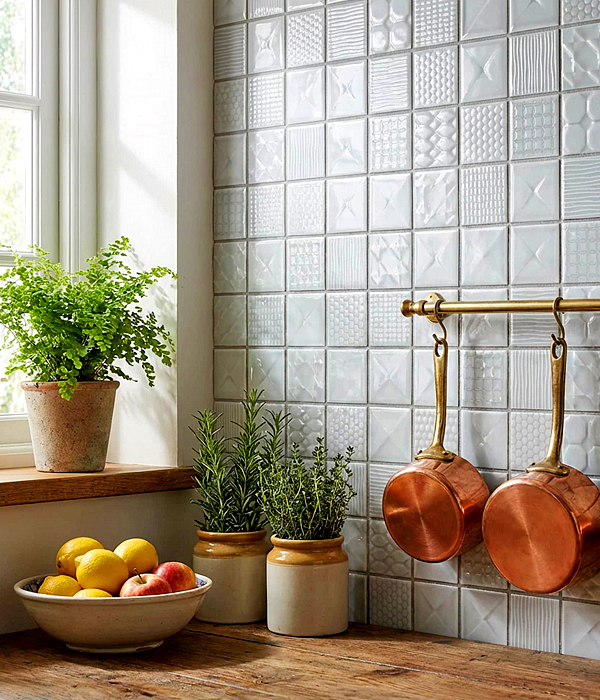
Ceramic Kitchen Mosaics
Ceramic is one of the most established tile materials and is a great practical choice for kitchens. It's lightweight, easy to cut during installation and naturally resistant to moisture when glazed, which makes it well-suited to splashbacks and feature walls.
Glazed ceramic also holds colour well over time, so it will not fade with regular exposure to daylight or steam. It's also one of the most budget-friendly mosaic options, which makes it a practical starting point for larger tiled areas where material cost can add up quickly.
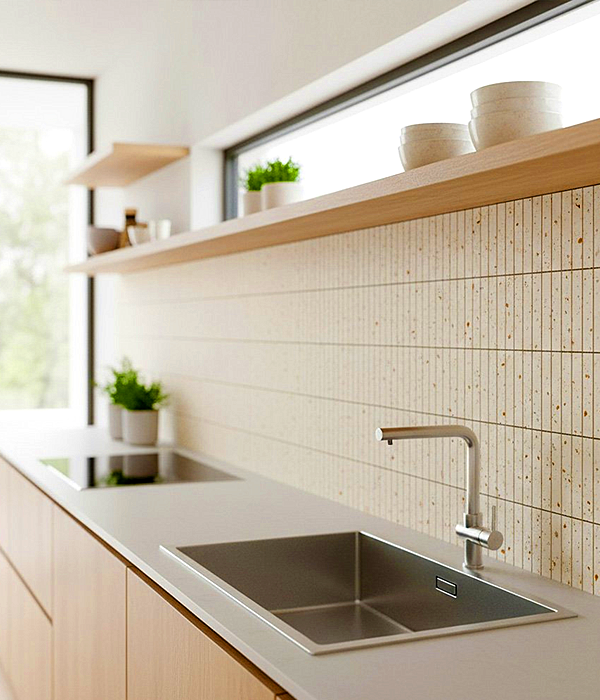
Natural Stone Kitchen Mosaics
Marble, travertine, slate and limestone all lend themselves beautifully to mosaic format. Natural stone tiles bring a warmth and uniqueness that is impossible to replicate with manufactured materials. No two tiles are identical, so you'll always get something unique with stone mosaics.
The trade-off is maintenance. Most natural stone is porous and must be sealed before grouting and periodically resealed thereafter, particularly in a kitchen environment. Marble is also susceptible to etching from acidic substances such as lemon juice and vinegar, so it is better suited to a feature wall or breakfast bar splashback than to the area directly behind a cooking surface.
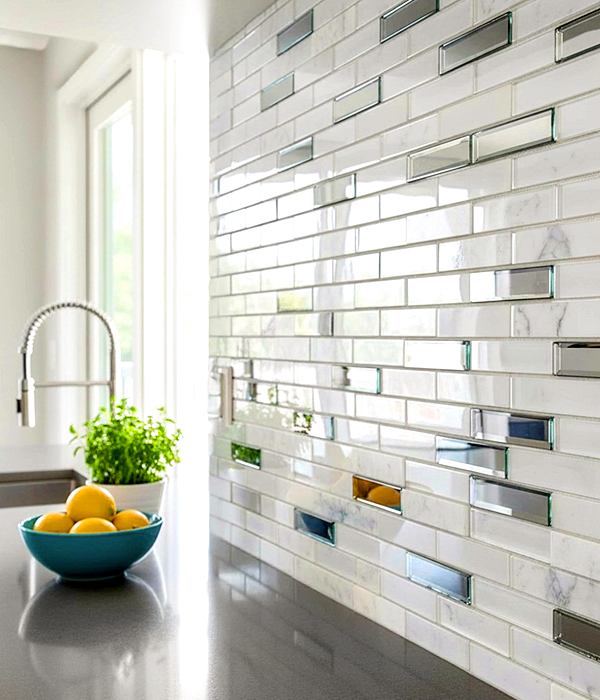
Metallic and Mixed-Media Mosaics
Stainless steel, copper and brushed aluminium mosaic tiles have a strong following in contemporary and industrial-style kitchens. They pair particularly well with dark cabinetry and concrete worktops. Many designers use metallic mosaic tiles as an accent strip within a larger field of glass or ceramic, creating a focal line behind the hob or along the top of a splashback.
Mixed-media sheets that combine glass, stone and metal tesserae on a single mesh backing are also a great way to introduce material variety without the complexity of planning multiple tile types independently.
Popular Design Ideas for Kitchen Mosaic Tiles
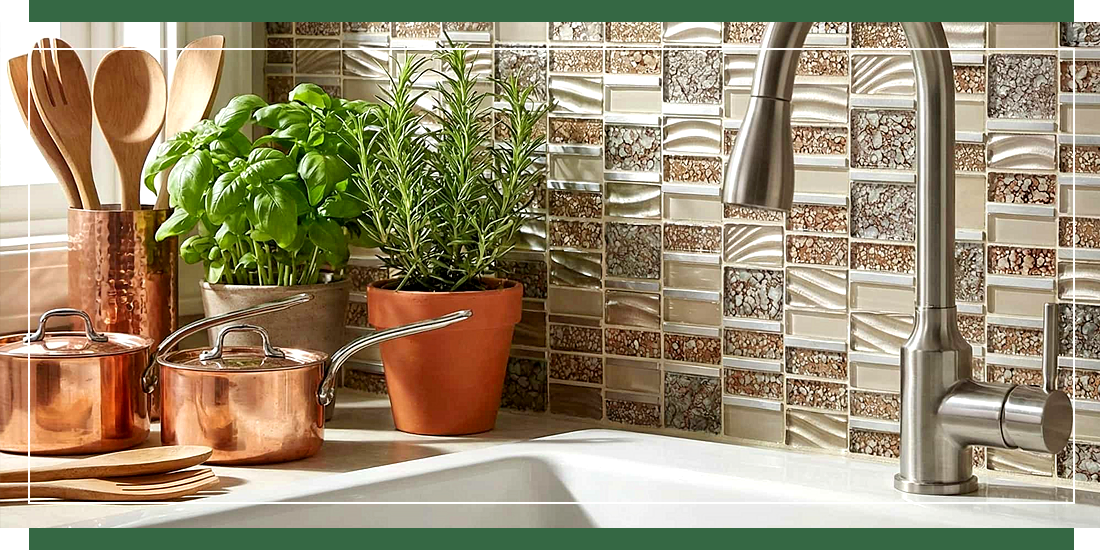
One of the best things about mosaic tiles is how many ways you can use them in a kitchen. Here are some of the most popular ways our customers use mosaic tiles in their kitchens:
The Classic Splashback
The splashback (the vertical surface between the worktop and the underside of the wall cabinets) is the single most popular location for kitchen mosaic tiles in the UK. A standard splashback is roughly 45–60 cm tall, giving you just enough space to make a design statement without the cost of tiling an entire room.
For a timeless look, white or off-white subway-style mosaics in a brick bond layout remain perennially popular. For something more distinctive, consider a tone-on-tone palette, varying shades of the same colour, or a gradated ombre effect that runs from a deeper tone at the base to a lighter tone at the top.
Full-Height Feature Walls
If your kitchen has an open-plan layout or a dining area that flows into the cooking space, a full-height tiled wall can serve as a dramatic focal point. For example, works especially well on a chimney breast that has been repurposed as a cooking alcove, where the mosaic can be continued across the full width of the wall from floor to ceiling.
When tiling a full-height wall, consider using a larger mosaic tile, such as 10 cm × 10 cm, or a plainer tile to reduce the visual busyness that can come from lots of fine design elements, including grout lines, over a larger surface.
Behind the Hob
The area directly behind a range cooker is one of the most-photographed spots in any kitchen. This is the place to use your most expressive mosaic: a hand-cut geometric pattern, a traditional Moorish star tile, a bold colour or a decorative panel that functions almost as a piece of wall art.
Bear in mind that this zone experiences the highest levels of heat and grease splatter. Glass or fully vitrified porcelain tiles are the most practical choices here.
Worktop Upstands
An upstand, a narrow strip of tile (typically 10–15 cm tall) fitted along the back of the worktop, is a cost-effective way to introduce mosaic into a kitchen without committing to a full splashback. Mosaic tiles are ideal for upstands because their small format means very little cutting is required, even at internal corners.
Island and Breakfast Bar Surrounds
The vertical surfaces of a kitchen island or breakfast bar peninsula are often left plain or painted, representing a missed opportunity. A mosaic tile finish, particularly in a rich colour or a textured natural stone, can turn these surfaces into a design feature that anchors the room.
Layout and Pattern Options
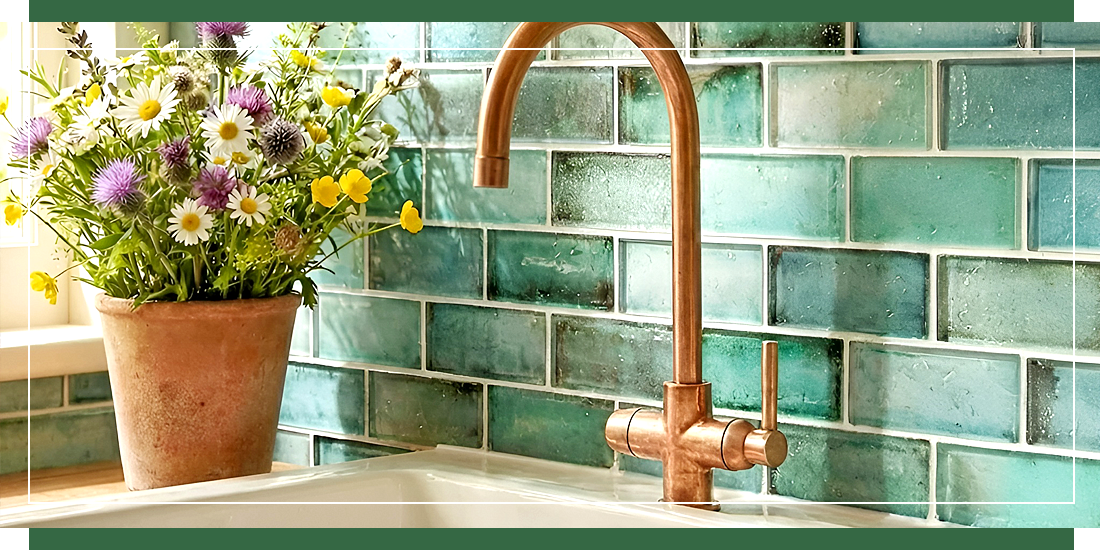
The way you lay your mosaic tiles is as important as the tile you choose. Most mosaic sheets are supplied with tiles pre-spaced on a mesh backing, so the sheet itself partly determines the layout, but you still have meaningful choices.
Straight grid (stacked): Tiles aligned in both horizontal and vertical rows. Clean, contemporary and well-suited to rectified tiles with very fine joints.
Brick bond (offset): Each row is offset by half a tile width, mimicking traditional brickwork. This is the most forgiving layout for slightly uneven walls and is a safe choice for most kitchens.
Herringbone: Rectangular mosaic tiles set at 45-degree angles to one another in a V-pattern. This layout has a strong directional energy and works particularly well with linear glass or marble tiles.
Diagonal / diamond grid: Tiles rotated 45 degrees relative to the wall plane, creating a diamond pattern. This adds movement and interest but requires more cutting at borders.
Colour and Finish Guidance
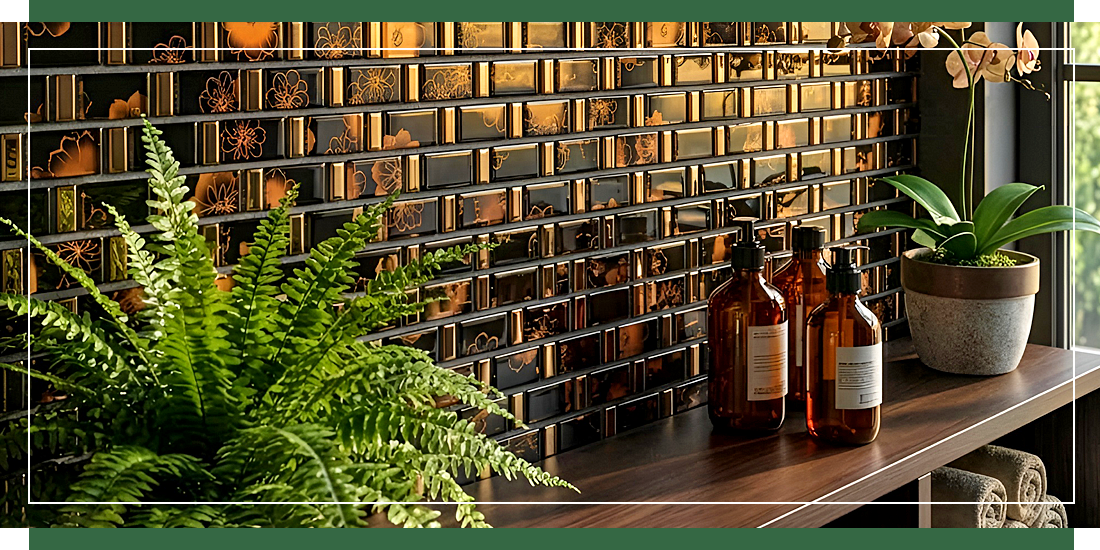
Colour selection for kitchen mosaic tiles should take into account three factors: the colour of the cabinetry, the tone of the worktop, and the level of natural light in the room.
White and off-white kitchens offer the most flexibility. Almost any mosaic colour will work, but a soft grey, sage green or dusty blue mosaic splashback will introduce warmth without overwhelming the lightness of the cabinetry.
Dark cabinetry (navy, forest green, charcoal) is typically best balanced by a lighter mosaic such as white, cream, pale gold or a warm-toned stone to prevent the kitchen from feeling cave-like. Metallic mosaics in gold or brass can also work superbly here, picking up hardware details.
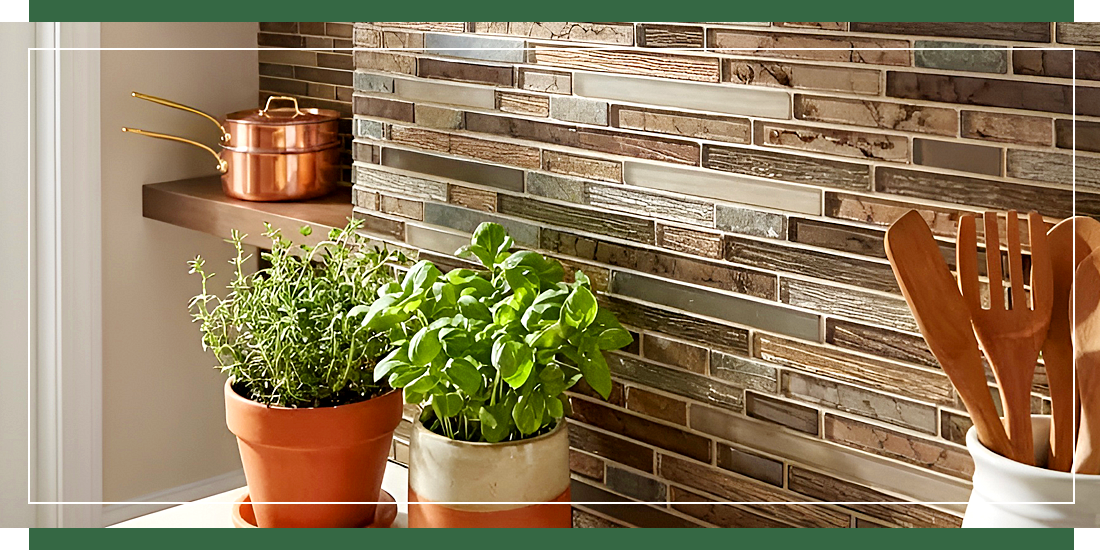
Wood-effect or natural wood cabinetry pairs naturally with stone mosaics: travertine, slate and limestone all echo the organic warmth of timber. Avoid very cool-toned tiles (stark white, ice blue), which can clash with the warmth of the wood.
Grout colour is frequently underestimated in mosaic design. A contrasting grout (dark grey grout with white tiles, for example) emphasises the grid pattern and gives a bold, graphic result. A matching or tonal grout (cream grout with cream tiles) allows the tile surface to read as a more continuous field of colour.
Kitchen Mosaic Installation Considerations
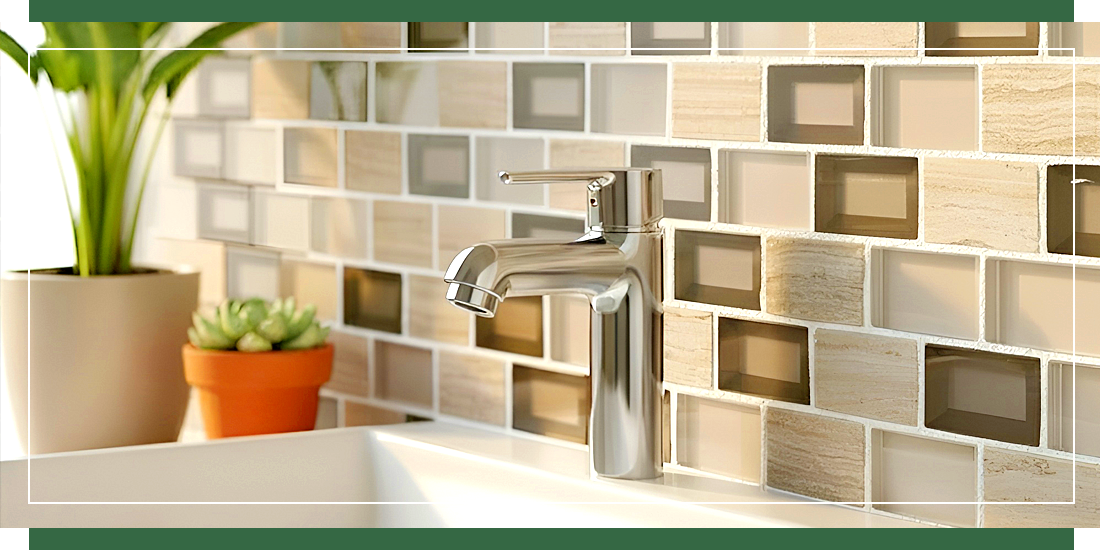
Mosaic tiles are sold on mesh-backed sheets, usually 30 cm × 30 cm, which makes installation significantly faster than working with individual tiles. However, there are some kitchen-specific installation points worth understanding before you start.
Surface Preparation is Critical
Kitchen walls, particularly around a sink or hob, may have residual grease, old adhesive or uneven plaster. All surfaces must be clean, dry, flat and sound before tiling begins. A specialist tile primer is recommended for painted plaster walls.
Adhesive Selection
Use a white, non-slip tile adhesive for glass mosaic tiles (grey adhesive can show through translucent tiles). For natural stone, use a low-shrinkage adhesive to avoid cracking. For areas directly behind a hob, ensure the adhesive is rated for intermittent heat.
Grouting
Use a fine-grade unsanded grout for joints under 3 mm. For kitchen applications, an epoxy grout is worth considering because it's highly stain-resistant, does not require sealing and is impervious to the cleaning products used in food-preparation environments. The higher upfront cost is offset by its near-zero maintenance requirements.
Sealing
If you have used natural stone mosaic tiles, apply a quality penetrating sealer before grouting, wipe away excess, allow to cure fully, then grout and seal again once the grout has dried. Reapply sealer annually or as recommended by the manufacturer.
Cleaning and Long-Term Maintenance
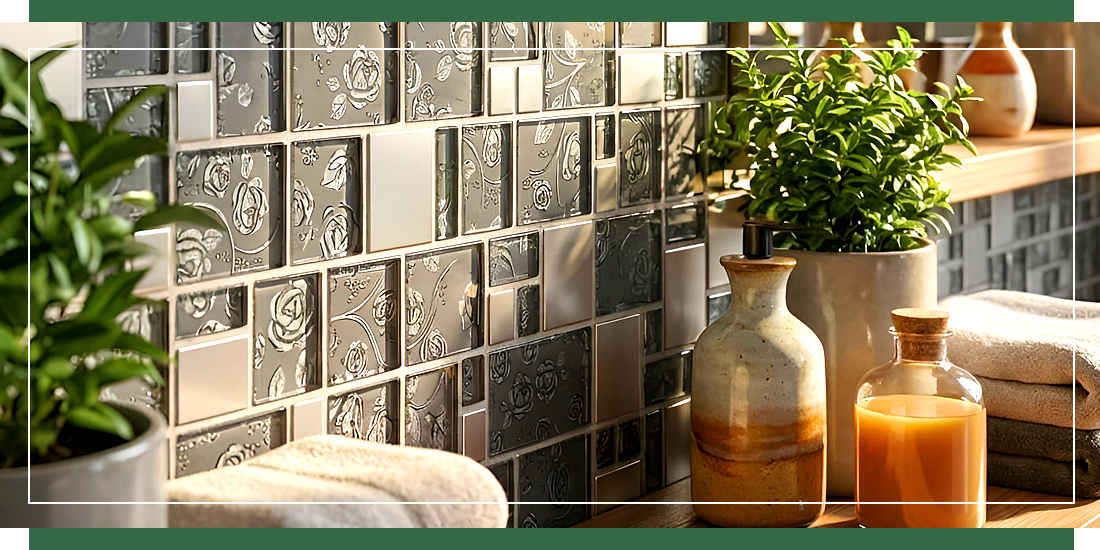
One of the most frequently asked questions about kitchen mosaic tiles is whether the numerous grout lines make them harder to clean than larger format tiles. The honest answer is: slightly, but less so than most people fear, particularly if the right products and installation methods are used.
Task
What to use
Tips
Day-to-day cleaning
Mild multi-surface spray and a microfibre cloth
Avoid abrasive scourers as they can scratch glass tiles and erode softer ceramics
Grease removal
Degreasing spray (weekly behind the hob)
Apply a light coat of grout sealer every 6–12 months to help grout repel oil and staining
Grout maintenance
Grout pen for minor discolouration; proprietary grout cleaner and a stiff-bristled brush for heavier staining
Available in white and a range of neutral tones; no need to re-grout in most cases
Steam cleaning
Handheld steam cleaner
Safe on glass, ceramic and porcelain. Avoid using on unsealed natural stone, as moisture can cause staining or structural damage
Sourcing Kitchen Mosaic Tiles in the UK
When choosing where to buy, prioritise suppliers who can provide:
-
Accurate colour samples (ideally physical samples rather than digital images alone, as screen colour rendering can be misleading)
-
Full technical data sheets including slip rating, water absorption, frost resistance and PEI wear rating
-
Batch matching guarantees if you are likely to need additional tiles at a later date
-
Expert advice on adhesive and grout compatibility, particularly for glass or natural stone tiles
At Mosaic Village, we stock a huge range of mosaics in glass, ceramic, and natural stone, with sample tiles available to order before to help you decide. Our expert team is also available to advise on both design options and practical installation requirements for UK kitchen conditions.
Bringing It All Together
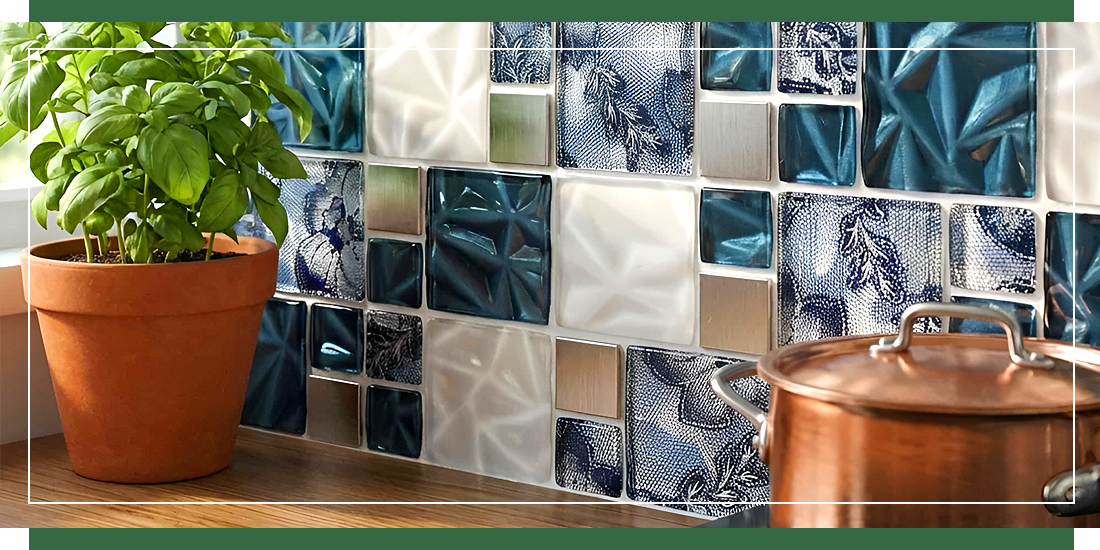
Kitchen mosaic tiles offer a genuinely exceptional combination of design versatility, practical durability and long-term value. Whether your project is a modest splashback refresh or a full kitchen renovation, the key decisions to make are:
-
Material
-
Colour
-
Layout
-
Grout
As with any tiling project, the finish of your mosaic tile installation will reward careful planning. So take the time to order samples, consider the interplay between your tiles, your wider kitchen design scheme, and the lighting in the room. And don't forget to invest in quality adhesive and grout to ensure your mosaic performs as well as it looks for years to come.
Explore our full kitchen mosaic tile collection to find inspiration and request samples for your project.
Frequently Asked Questions
Mosaic Village Is Rated 'Excellent'
 Don't just take our word for it. Hear what our customers have to say!