What Are Mosaic Tile Sheets & How Do They Work?
If you’ve ever looked at mosaic tiles, you’ve probably noticed that they’re usually sold in square sheets rather than as individual tiles. For many people, this raises questions such as what are mosaic tile sheets, why are they used, and does the sheet format affect how the tiles look once installed?
Mosaic tile sheets are actually a key part of what makes mosaics practical and versatile in modern interiors. Understanding how they work can help you plan your project more confidently, whether you’re installing mosaics yourself or working with a professional.
This guide explains what mosaic tile sheets are, how they’re made, and why they’re used, along with what to expect during installation.
What Are Mosaic Tile Sheets?
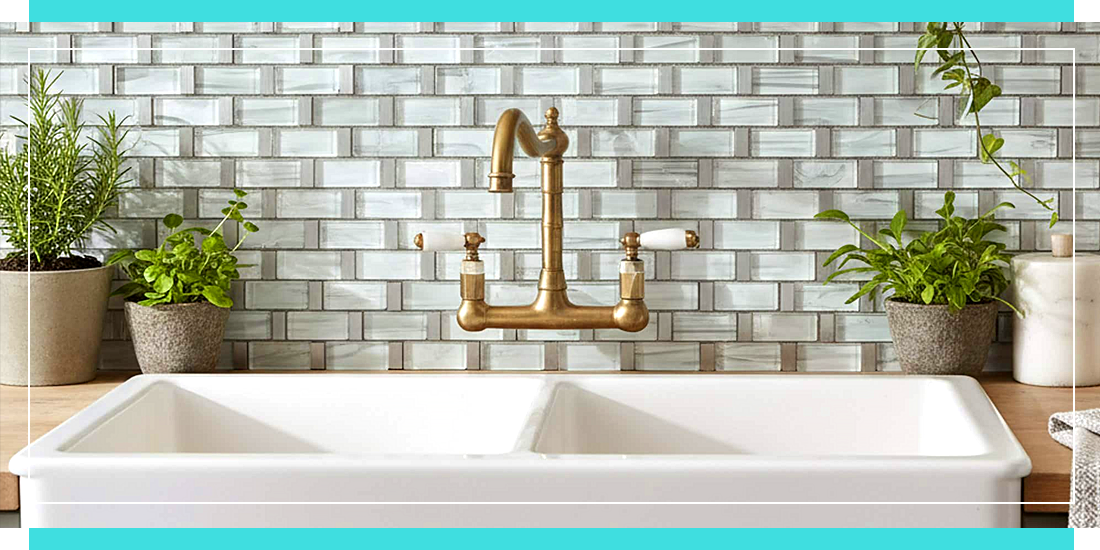
Mosaic tile sheets are collections of small individual tiles (often referred to as tesserae or chips), arranged into a set pattern and held together on a backing. Each sheet typically measures around 300 × 300 mm, although sizes can vary.
The individual tiles remain separate pieces, with grout joints between them once installed. The sheet simply acts as a temporary support, keeping the layout consistent and making installation quicker and more precise.
Once fitted and grouted, mosaic tile sheets create the appearance of individually placed tiles, with the backing no longer visible.
Why Are Mosaic Tiles Supplied on Sheets?
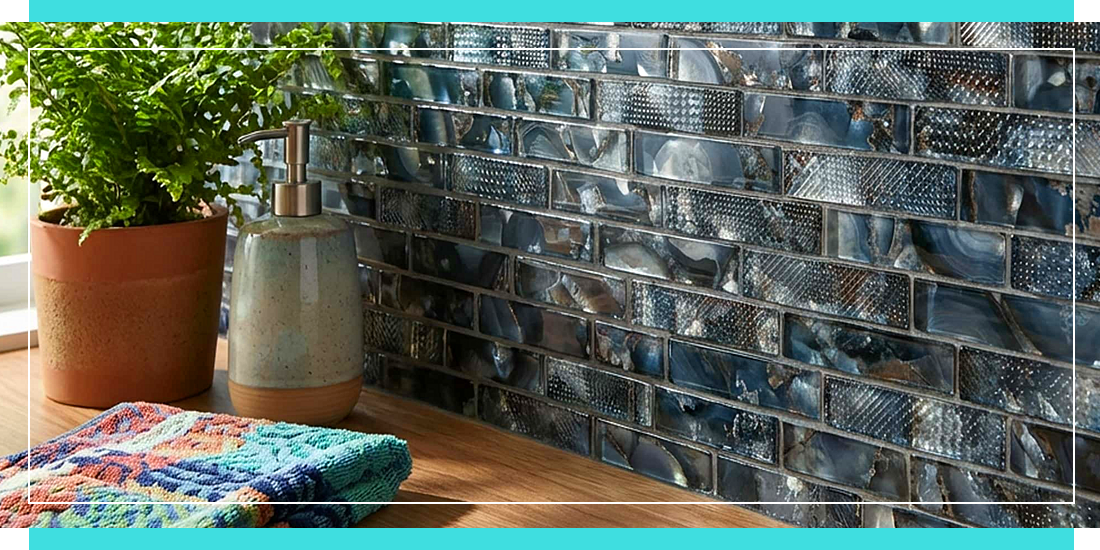
Mosaic tiles are supplied on sheets because the individual pieces are very small. While this small scale allows for detailed designs and intricate layouts, installing each tile separately would be slow, difficult, and hard to do consistently.
The sheet format solves this problem by arranging individual tiles into a fixed layout at the manufacturing stage. This allows mosaics to be installed efficiently while maintaining even spacing and accurate alignment across the finished surface.
Importantly, supplying mosaics on sheets does not change how they look once installed. After grouting, the backing is no longer visible and the tiles appear as individual pieces set by hand. The sheet simply acts as a system that makes mosaics practical to install without limiting design choice.
Are Mosaic Tile Sheets Easy to Install?
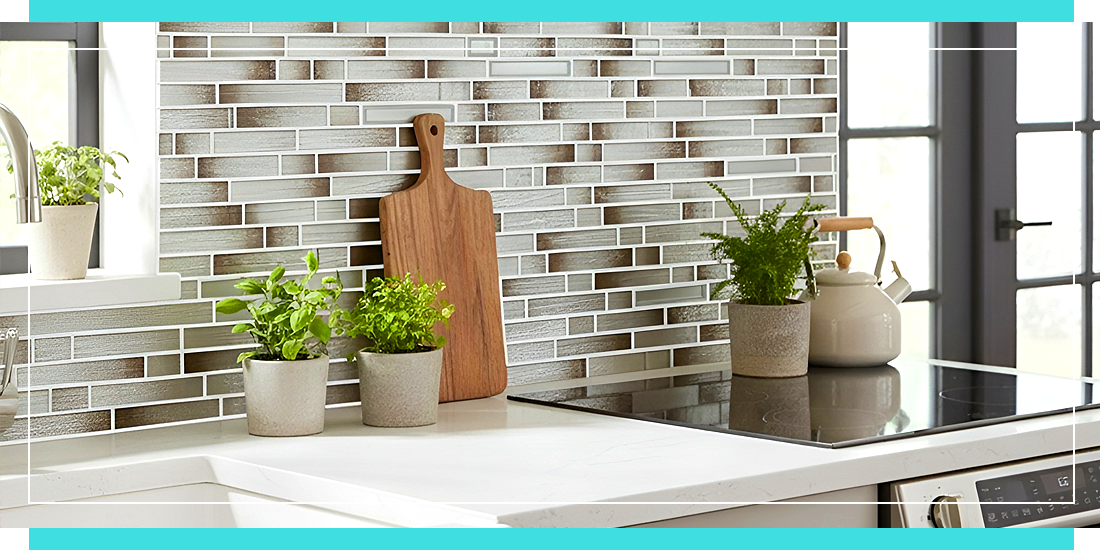
Yes, ease of installation is one of the main reasons mosaic tiles are sold on sheets. By holding many small tiles in a fixed layout, sheets remove much of the complexity that would come with positioning each tile individually.
Mosaic tile sheets help simplify installation by:
-
Keeping tile spacing consistent across the surface
-
Eliminating the need to position each small tile individually
-
Making alignment easier, especially on walls
-
Helping patterns stay straight and evenly balanced
-
Making it easier to work around edges, fixtures, and cut-outs
For DIY installers, this makes mosaics far more manageable and reduces the risk of uneven grout lines or misaligned tiles. For professional installers, sheets improve speed and consistency, particularly across larger or more detailed areas.
That being said, mosaic tile sheets still require care and accuracy. While the format makes installation easier, attention to detail is essential to achieve a clean, professional finish.
How Mosaic Tile Sheets Affect Installation
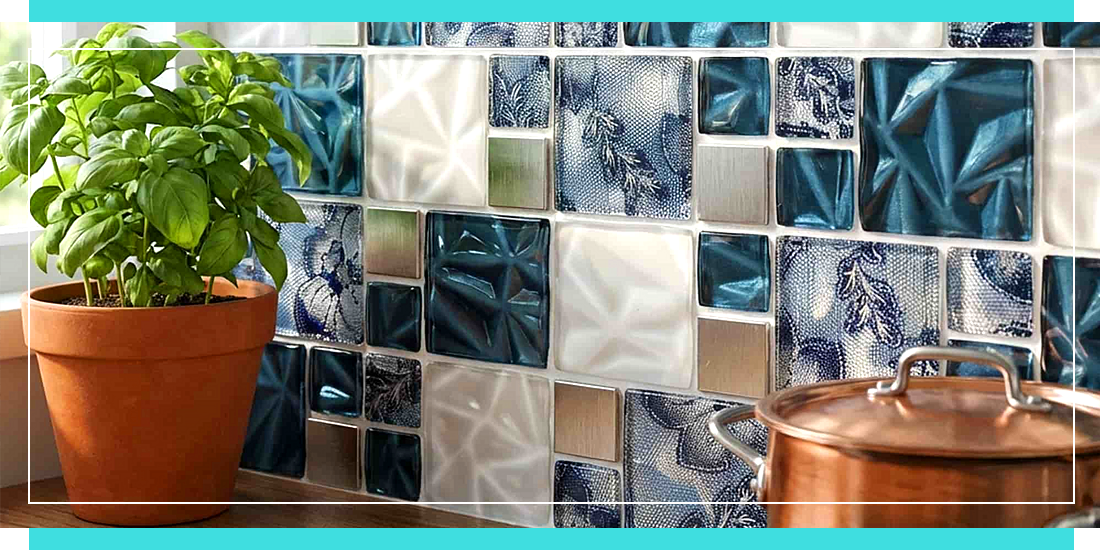
Mosaic tile sheets change the installation process in several important ways compared to larger-format tiles. While the same basic tiling principles apply, the sheet format influences how mosaics are positioned, cut, and finished.
Different cutting approach
Instead of cutting each tile individually, installers usually cut the backing sheet to size and then adjust individual tiles where necessary. This makes shaping mosaics around fixtures more efficient while still allowing for precise detailing.
Spacing and sheet joins
Because tiles are pre-spaced on each sheet, grout joints are generally consistent across the surface. However, extra care is needed where sheets meet to avoid visible grid lines. Adjusting individual tiles along sheet edges helps blend joins seamlessly.
Alignment across edges and obstacles
The backing helps keep tiles aligned when working around corners, fixtures, and fittings. This makes it easier to maintain straight lines along edges and around features such as taps, sockets, or drains.
Flexibility around curves and contours
Mosaic sheets are more flexible than rigid tiles, allowing them to follow curved surfaces and subtle contours. This makes them particularly suitable for curved walls, rounded shower trays, and detailed architectural features.
Importance of surface preparation
Because mosaic tiles are small and closely spaced, any unevenness in the surface beneath can show through once installed. A flat, well-prepared substrate is especially important to achieve an even, professional-looking finish.
Visual impact of grout
With mosaics, grout lines form a larger proportion of the finished surface than with larger tiles. While the sheet format helps maintain consistent spacing, grout colour and application technique still play a major role in the final appearance.
How Mosaic Tile Sheets Are Made
The process of making mosaic tile sheets typically follows these steps:
1. Tile cutting: Tiles are cut into small, precise pieces depending on the design.
2. Pattern arrangement: The pieces are arranged into the desired layout with consistent spacing.
3. Backing application: A backing material is applied to hold the tiles together temporarily.
4. Quality control: Spacing, alignment, and surface finish are checked before packaging.
This process ensures that each sheet maintains the intended pattern and spacing, making installation more predictable.
Types of Mosaic Tile Sheets
Not all mosaic tile sheets are backed in the same way. The backing type affects how the tiles are installed and handled.
Mesh-Backed Mosaic Sheets
This is the most common format, and the vast majority of mosaic tiles on the market today are supplied on mesh-backed sheets. A fibreglass or plastic mesh is attached to the back of the tiles with adhesive.
Why it’s used:
-
Flexible and easy to cut
-
Suitable for most walls and floors
-
Works well with curved surfaces
Paper-Faced Mosaic Sheets
Paper is temporarily attached to the front of the tiles and removed after installation. This is not as common as mesh backing, and while it can give good results, it can also be a little trickier to work with.
Why it’s used:
-
Allows very precise alignment
-
Sometimes used for glass mosaics
Dot-Mounted Mosaic Sheets
Small adhesive dots hold each tile in place instead of a full mesh. With this type of mosaic, the individual pieces are attached to one another, rather than a mesh backing.
Why it’s used:
-
Allows more adhesive contact with the tile
-
Creates a stronger bond between tiles and the surface
When Mosaic Tile Sheets Work Best
Mosaic tile sheets are particularly straightforward, efficient, and effective for:
-
Shower walls and floors
-
Splashbacks
-
Feature areas
-
Curved or detailed surfaces
-
Areas with lots of fixtures or edges
When Mosaic Tile Sheets Need Extra Care
Mosaic sheets are suitable for any mosaic tile installation project. However, some situations require additional attention to ensure a flawless finish:
-
Highly visible feature walls
-
Large uninterrupted surfaces
-
Bold or high-contrast grout choices
-
Translucent glass mosaics
In these cases, careful alignment and preparation make a noticeable difference so it’s worth taking your time
Common Misconceptions About Mosaic Tile Sheets
Mosaic tile sheets play a crucial role in making mosaics practical, precise, and accessible for modern interiors. They simplify installation, improve consistency, and allow intricate designs to be installed efficiently.
However, there are some misconceptions about how tile sheets work, how to use them, and the type of finish they produce. Here we clear up some of the most common myths about mosaic tile sheets.
Misconception
Reality
Sheets mean the tiles aren’t individual.
Each tile remains separate once installed; the sheet is only temporary.
Sheets limit design freedom.
Sheets are available in countless patterns, shapes, and layouts of tile.
Sheets look repetitive.
When installed correctly, grout lines blend sheets together seamlessly.
Mosaic tile sheets are lower quality than individual tiles.
Mosaic sheets are made up of individual tiles that meet the same quality standards as larger tiles. The sheet format is simply a way of arranging and handling those tiles during installation.
You can see the sheet grid once the tiles are installed.
When mosaic sheets are installed correctly, the joints between sheets are not visible. The sheet is on the reverse of the tiles and is embedded within the tile adhesive.
Mosaic tile sheets are only for professionals.
The sheet format actually makes mosaics more accessible for DIY projects. Sheets reduce the complexity of spacing and alignment, making mosaics easier to manage than loose tiles.
Mosaic sheets are difficult to cut.
Mosaic sheets can be trimmed easily by cutting the backing and adjusting individual tiles as needed. This makes them easier to fit around fixtures and edges than larger tiles.
Mosaic sheets are only suitable for small areas.
While mosaics are often used for feature areas, they can also be installed across larger surfaces. The sheet format actually helps maintain consistency and alignment over wider areas.
Mosaic sheets can’t follow curves or unusual shapes.
The flexibility of most mosaic sheets makes them well suited to curved surfaces, corners, and irregular spaces; often more so than rigid tiles.
FAQs
Mosaic Village Is Rated 'Excellent'
 Don't just take our word for it. Hear what our customers have to say!