Bathroom Mosaic Tiles:
What You Need to Know
Bathrooms are one of the most popular places to use mosaic tiles, and for good reason. They combine practicality with visual impact in a way that suits the room particularly well, whether you’re planning a shower wall, a feature floor, a recessed niche, or a simple splashback.
Mosaics are also one of the few tile formats that can work equally well as a practical surface and a design feature, which is why they’re so often used in bathrooms.
In this guide, we’ll explain where bathroom mosaic tiles work best, which materials are most suitable, what to consider for walls and floors, and how to use mosaics in a way that feels balanced, practical, and long-lasting.
Key Takeaways
-
Bathroom mosaic tiles work best when chosen for the specific zone they’ll be used in
-
Glass and ceramic mosaics are often the easiest options for bathroom walls
-
Stone and marble mosaics can look beautiful, but they need more care
-
Mosaic tiles are especially useful for shower floors, niches, splashbacks, and feature walls
-
Slip resistance, grout, and maintenance should all be considered early
-
Bold or highly decorative mosaics usually work best in defined areas rather than across every surface
Why Mosaic Tiles Work So Well in Bathrooms
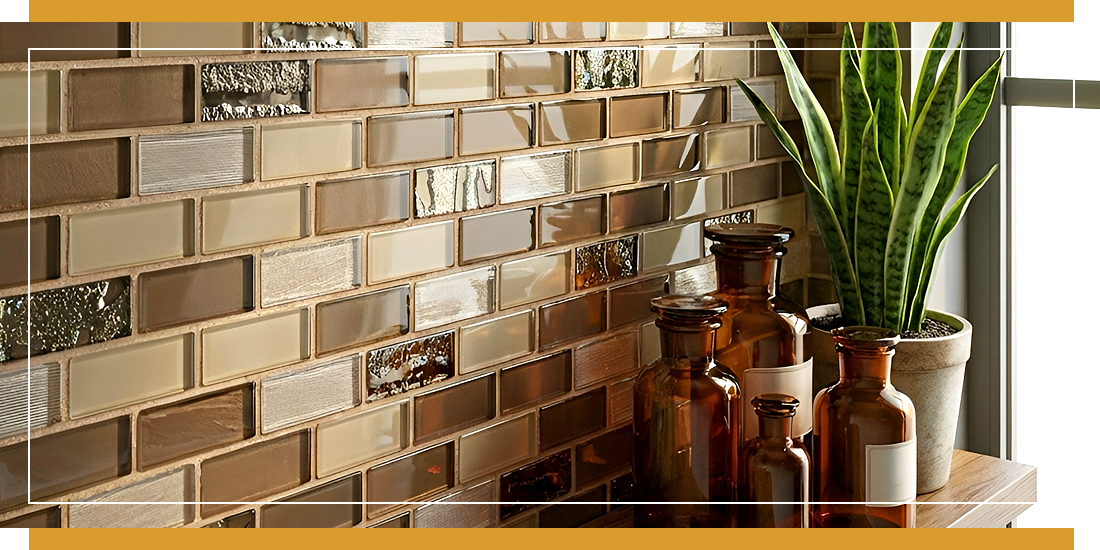
Bathrooms are one of the spaces where mosaic tiles make the most practical and visual sense. More than just being useful as a decorative touch, mosaics also suit the way bathrooms are actually used.
They Handle Detailed Areas Well
Bathrooms often include smaller or more awkward spaces than other rooms, such as:
-
Shower niches
-
Splashbacks behind basins
-
Boxed-in pipework
-
Curved or sloped shower floors
-
Feature panels in compact areas
Because mosaics are made up of many small pieces, they adapt much more easily to these kinds of spaces than larger-format tiles.
They Add Texture Without Needing Much Space
Bathrooms are often smaller rooms, which means every design choice has more impact. Mosaic tiles are useful here because they can introduce texture, colour, or pattern without needing a large area to work.
A small section of mosaic tiling can be enough to lift the whole room, especially when used in a shower enclosure, behind a vanity unit, or inside a recess.
They Can Improve Grip In Wet Areas
On bathroom floors, especially in showers and wet rooms, mosaic tiles can offer a practical advantage. Because they create more grout lines, they often provide better underfoot grip than larger tiles.
This is one of the reasons mosaics are such a popular choice for shower floors, although the specific product still needs to be suitable for that use.
They Suit Both Practical And Decorative Roles
Some tiles are chosen mainly for performance, while others are chosen mainly for appearance. Bathroom mosaics often do both. Depending on the material and placement, they can:
-
Resist moisture well
-
Add visual interest
-
Help define specific areas
-
Introduce contrast into a calm bathroom scheme
This combination of practicality and design flexibility is a big part of why mosaics work so well in bathrooms.
Our Tiling Experts Say:
“Bathrooms are one of the easiest places to use mosaics well because the format naturally suits the room. You’ve got smaller zones, more moisture, and more opportunity to use texture and detail in a way that feels both practical and decorative.”
Where to Use Mosaic Tiles in a Bathroom
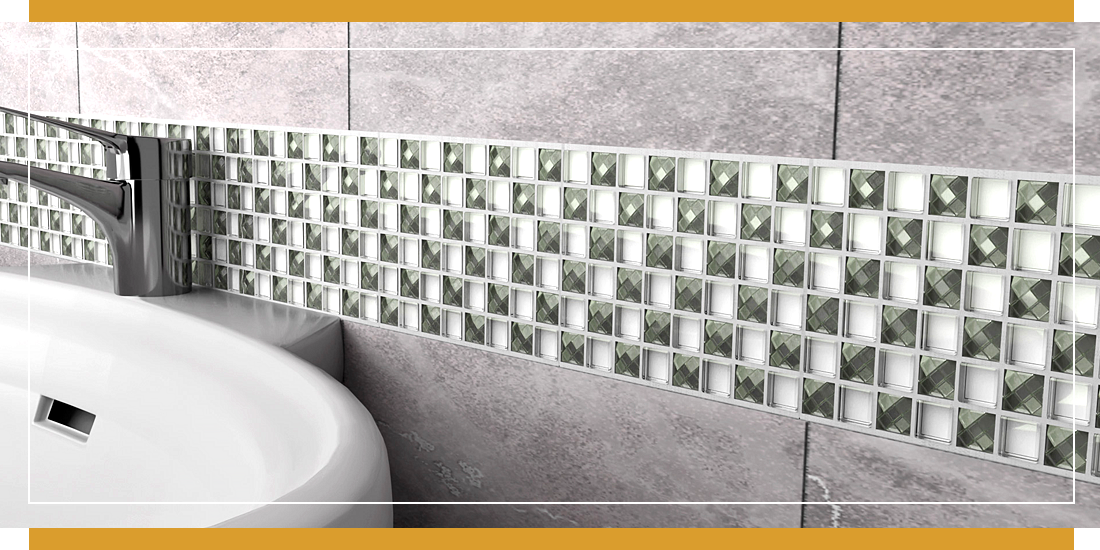
One of the reasons mosaic tiles work so well in bathrooms is that they’re incredibly versatile. They can be used in fully practical zones, purely decorative areas, or places where both function and design matter equally.
The key is to match the type of mosaic to the part of the bathroom you’re using it in.
Shower Walls
Mosaic tiles are a popular choice for shower walls because they add texture and detail without needing a large amount of space. They work particularly well in walk-in showers, enclosed cubicles, and wet rooms where you want to create a focal point without overwhelming the rest of the bathroom.
Glass and ceramic mosaics are often especially effective here because they handle moisture well and are relatively easy to maintain. More decorative finishes can also work well on shower walls, as long as they’re suitable for wet areas.
Shower Floors
Shower floors are one of the most practical places to use mosaic tiles. Because mosaics create more grout lines than larger-format tiles, they can provide improved grip underfoot, which is especially useful in wet areas.
They also work well on sloped or contoured shower bases, where larger tiles can be harder to fit neatly. That said, not every mosaic is suitable for floor use, so it’s important to check that the product is rated correctly before choosing it for a shower floor.
Bathroom Splashbacks
Mosaics are an excellent option behind basins and vanity units, where they can create a small but visually effective feature. In these areas, they help protect the wall from splashes while also adding detail and contrast to the room.
This is a good place to be slightly more expressive with colour, finish, or texture, particularly if the rest of the bathroom is calm and understated.
Recessed Niches
A recessed shower niche is one of the most effective places to use mosaic tiles. Because the area is naturally framed, mosaics can add interest without needing much space.
This is often where a more decorative mosaic can work best, since the smaller scale keeps the detail contained and intentional. It’s also a good way to tie in the colour or material of the wider bathroom without repeating it everywhere.
Feature Walls
Mosaic tiles can also be used across a dedicated feature wall, either behind a vanity, in a shower enclosure, or on a smaller section of the bathroom where you want to create impact.
The key here is balance. Mosaic feature walls tend to work best when the surrounding surfaces are simpler, allowing the detail of the tile to stand out without making the room feel visually crowded.
Decorative Accents And Borders
In some bathrooms, mosaics are used more sparingly as a border, trim, or narrow feature strip. This can work well when you want to introduce texture or contrast in a more controlled way.
While this style of use is less common in very contemporary bathrooms than it once was, it can still work well when handled carefully and matched to the wider scheme.
Our Tiling Experts Say:
“One of the biggest strengths of mosaics in a bathroom is that they don’t need much space to make an impact. A niche, splashback, or shower floor can often be enough to give the room far more character without making it feel overdesigned.”
Choosing The Right Material For Bathroom Mosaic Tiles
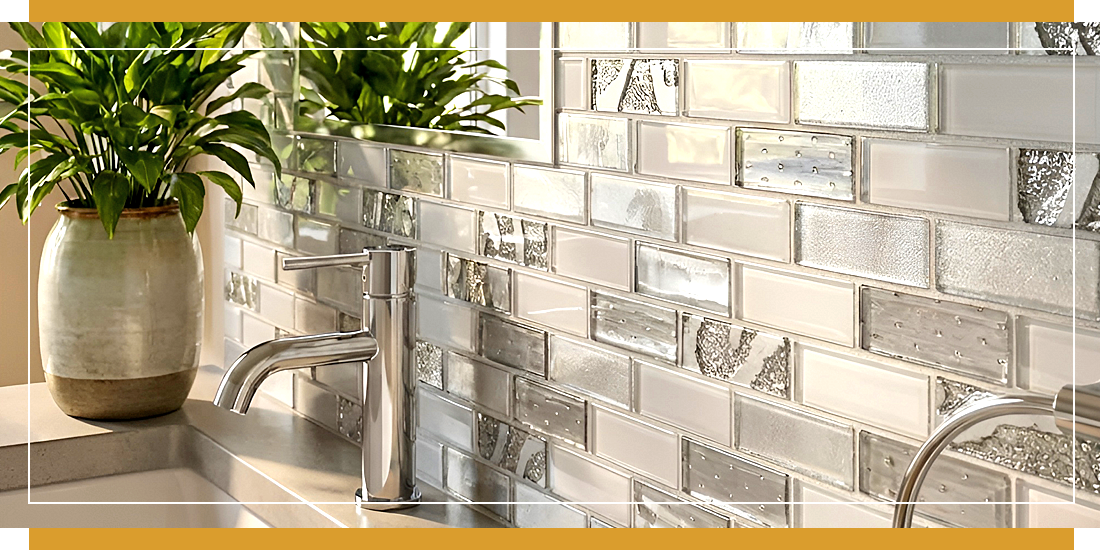
Not all mosaic materials behave the same way in a bathroom. Some are naturally better suited to moisture-heavy spaces, while others need more careful placement and ongoing maintenance.
The best material depends on where the mosaic will be used, how much water it will be exposed to, and how much upkeep you’re comfortable with.
Our Tiling Experts Say:
“In bathrooms, the material usually matters more than the pattern. A mosaic that suits the moisture levels and the way the space is used will nearly always give a better long-term result than one chosen just for its appearance.”
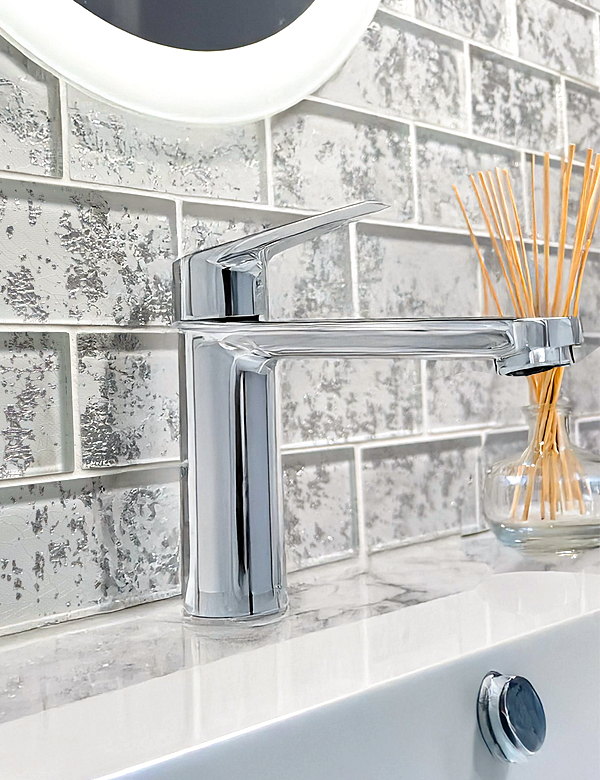
Glass Bathroom Mosaic Tiles
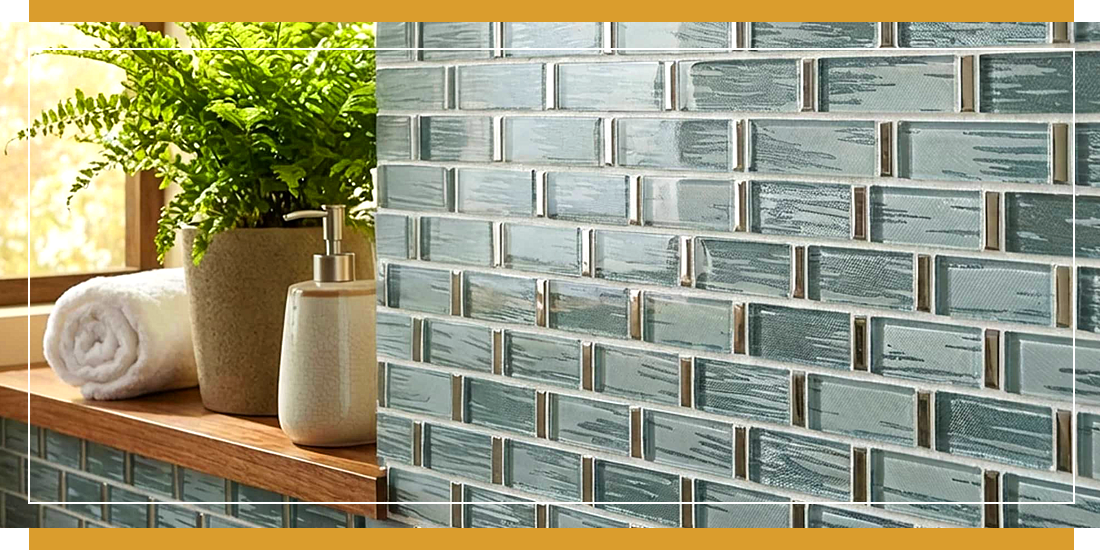
Glass mosaics are one of the most practical choices for bathrooms. Their non-porous surface makes them highly resistant to water and staining, which is why they’re so often used in showers, splashbacks, and feature walls.
They also reflect light well, which can help brighten smaller bathrooms or rooms with limited natural light. They’re typically a strong option if you want something that is:
-
Easy to clean
-
Water resistant
-
Light reflective
-
Suitable for walls and many wet areas
For many bathrooms, glass is one of the safest all-round choices.
Browse: Glass Bathroom Mosaics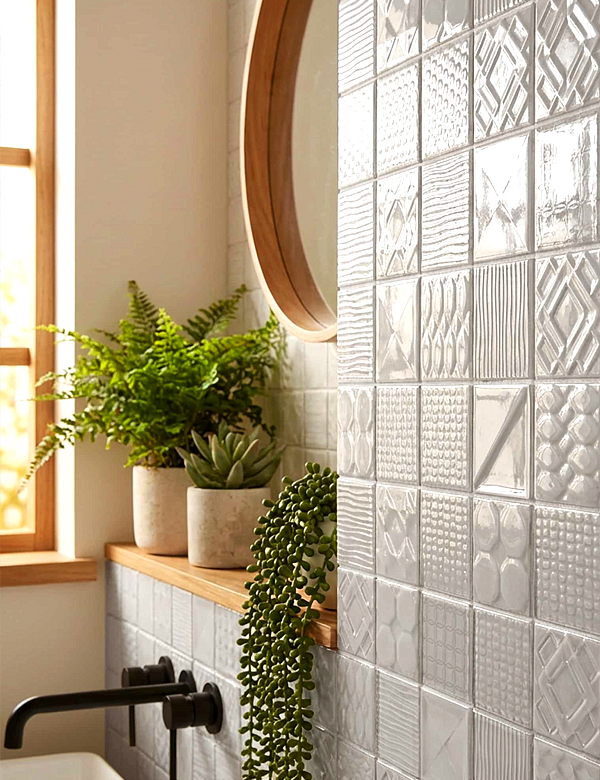
Ceramic Bathroom Mosaic Tiles
Ceramic mosaics are another strong bathroom option, especially for walls. Their glazed finish makes them easy to wipe clean, resistant to staining, and available in a wide range of colours and finishes.
They’re often chosen when you want a practical mosaic that still gives plenty of design flexibility. Ceramic mosaics work particularly well in:
-
Bathroom walls
-
Splashbacks
-
Decorative accents
-
Recessed niches
As with any mosaic, floor suitability should still be checked at product level.
Browse: Ceramic Bathroom Mosaics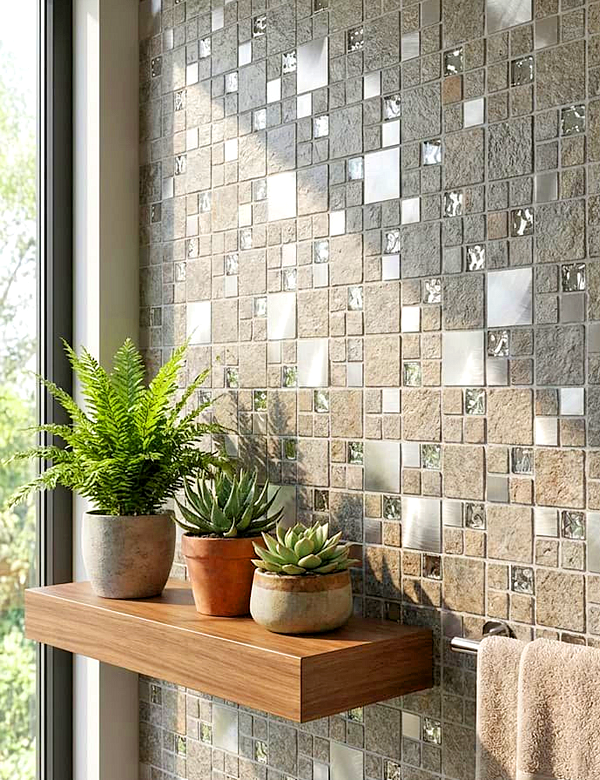
Stone Bathroom Mosaic Tiles
Stone mosaics can look beautiful in bathrooms, especially where you want a more natural, textured feel. They bring warmth and material variation that manufactured finishes can’t always replicate.
However, they do need more care. Because stone is porous, it usually requires sealing and more careful cleaning, particularly in wet zones or areas exposed to frequent splashing.
Stone mosaics are often best suited to:
-
Feature walls
-
Bathroom accents
-
Lower-moisture areas within the room
They can be used in bathrooms very successfully, but they’re usually not the most low-maintenance option.
Browse: Stone Bathroom Mosaics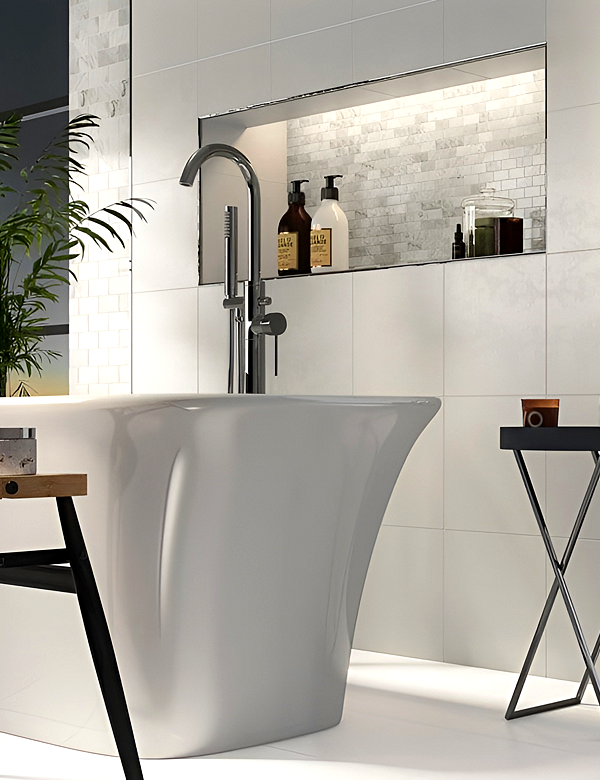
Marble Bathroom Mosaic Tiles
Marble mosaics are often chosen for bathrooms because they add refinement, softness, and natural veining in a way that feels timeless. They work especially well in niches, vanity areas, and elegant feature sections.
Like stone, marble needs a gentler approach. It is more sensitive to certain cleaning products, and sealing is usually required to help protect it over time. Marble mosaics are a good choice if you want:
-
A more luxurious finish
-
Natural variation and detail
-
A timeless, classic look
They’re very effective visually, but they do need a little more attention than glass or ceramic.
Browse: Marble Bathroom Mosaics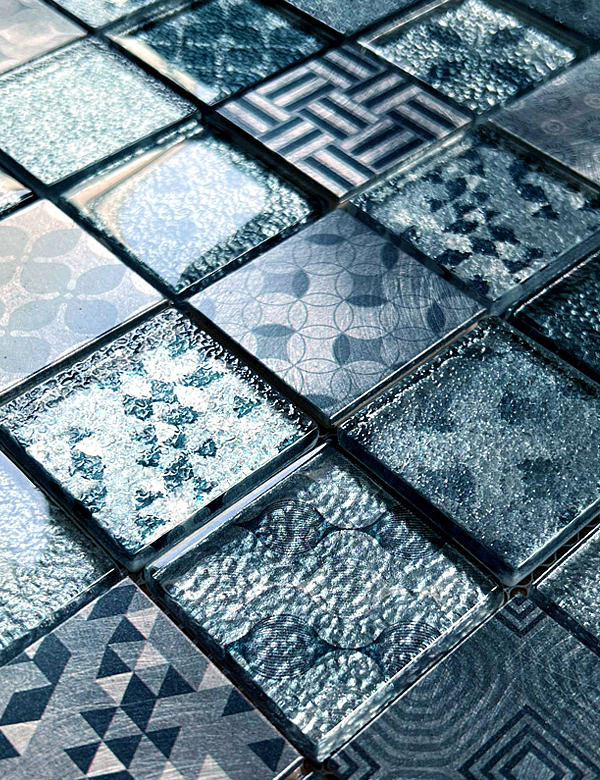
Metallic Bathroom Mosaic Tiles
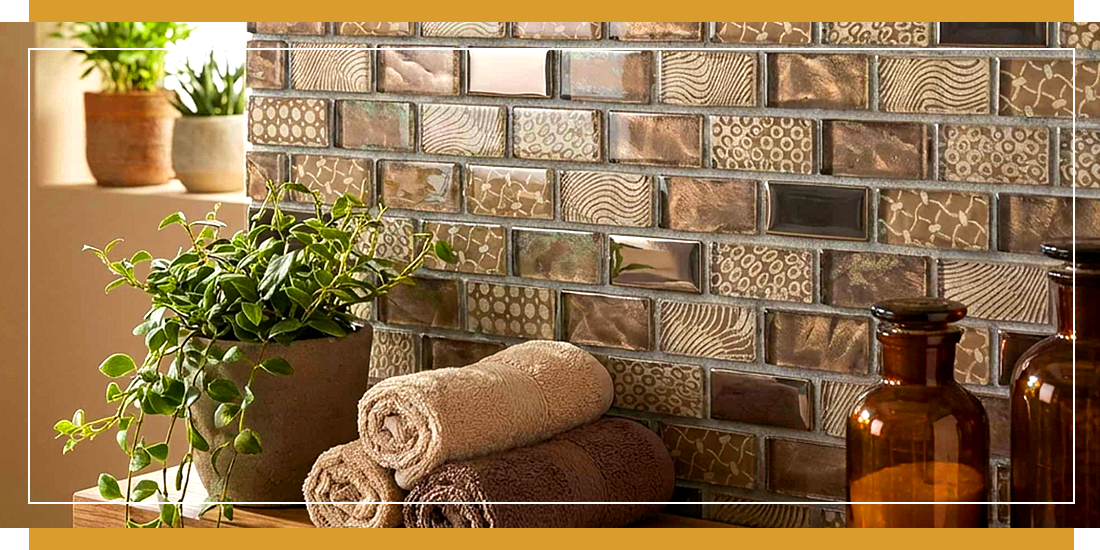
Metallic mosaics can work well in bathrooms, but they’re usually best used sparingly. Their reflective finish can add contrast and a contemporary edge, particularly in smaller feature areas or as part of a mixed-material design.
They’re generally more suitable for accents than large surfaces, and they may be less appropriate for heavily wet zones depending on the product. Metallic mosaics are often most effective in:
-
Small splashback areas
-
Feature strips
-
Accent details
They can be striking, but they usually need more restraint than other bathroom mosaic materials.
Bathroom Walls Vs Bathroom Floors: What Changes?
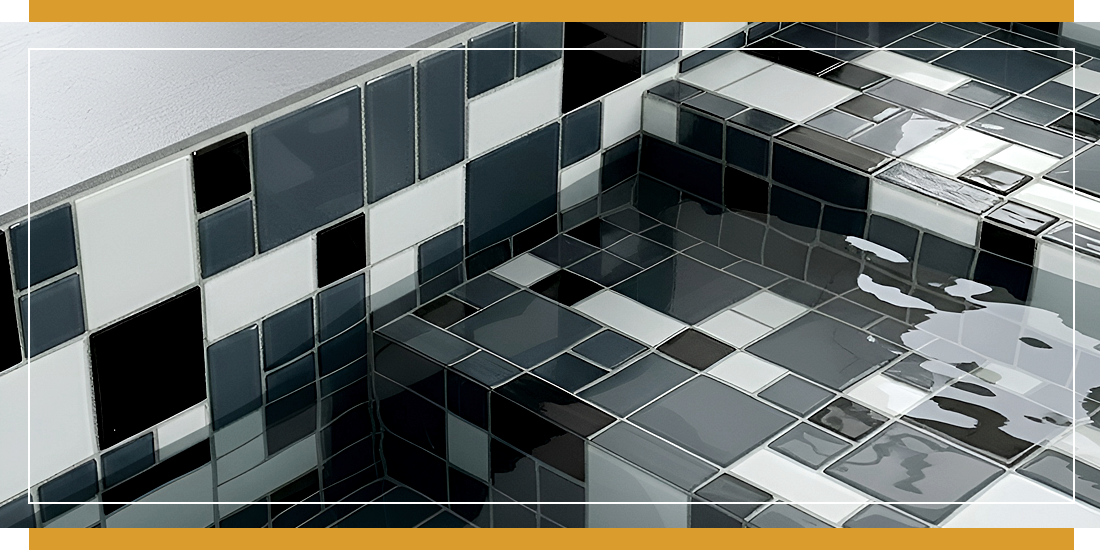
Bathroom walls and bathroom floors may sit within the same room, but they place very different demands on mosaic tiles. A material or finish that works beautifully on a shower wall may not be the right choice for a bathroom floor, especially once water, foot traffic, and slip resistance come into play.
Understanding this distinction early helps avoid one of the most common bathroom tiling mistakes: choosing a mosaic based on appearance without checking whether it’s actually suitable for the surface.
Bathroom Walls Allow More Freedom
Walls generally give you more flexibility when choosing mosaic tiles. Because they don’t need to cope with foot traffic or the same level of wear, you can often use a wider range of materials, finishes, and decorative effects.
This means bathroom walls are usually the best place to introduce:
-
More intricate patterns
-
Glossy or reflective finishes
-
Decorative feature mosaics
-
Materials that are beautiful but slightly more delicate
As long as the mosaic is suitable for the environment (for example, a wet shower wall rather than a dry feature area), walls tend to offer the most design freedom.
Bathroom Floors Need More Practical Consideration
Floors need a more careful approach. Mosaic tiles used on bathroom floors have to cope with regular foot traffic, moisture, cleaning, and in some cases standing water.
That means you need to think more carefully about:
-
Slip resistance
-
Durability
-
Surface texture
-
Product suitability for floor use
This is especially important in showers and wet rooms, where water exposure is constant and safety matters just as much as appearance.
Not Every Wall Mosaic Is Suitable For Floors
One of the easiest mistakes to make is assuming that because a mosaic looks durable, it can be used on the floor. In reality, floor suitability should always be checked at product level.
Even if two mosaics look similar, they may behave very differently underfoot depending on:
-
The material
-
The finish
-
The tile thickness
-
The manufacturer’s intended use
This is why it’s so important to check specifications rather than relying on appearance alone.
Smaller Format Can Be A Practical Advantage On Floors
One of the reasons mosaics work so well on bathroom floors is the increased number of grout lines. These grout joints can improve underfoot grip, which is why mosaic tiles are often such a good option for shower floors.
They also adapt more easily to sloped shower trays, curved floor areas, and compact or awkward bathroom layouts. This makes them both practical and visually effective, as long as the specific product is designed for floor use.
Our Tiling Experts Say:
“Bathroom walls are where you can usually be more expressive. Floors need a bit more discipline. If a mosaic is going underfoot, practicality has to lead the decision, even if the final look is still important.”
Slip Resistance And Safety In Bathroom Mosaics
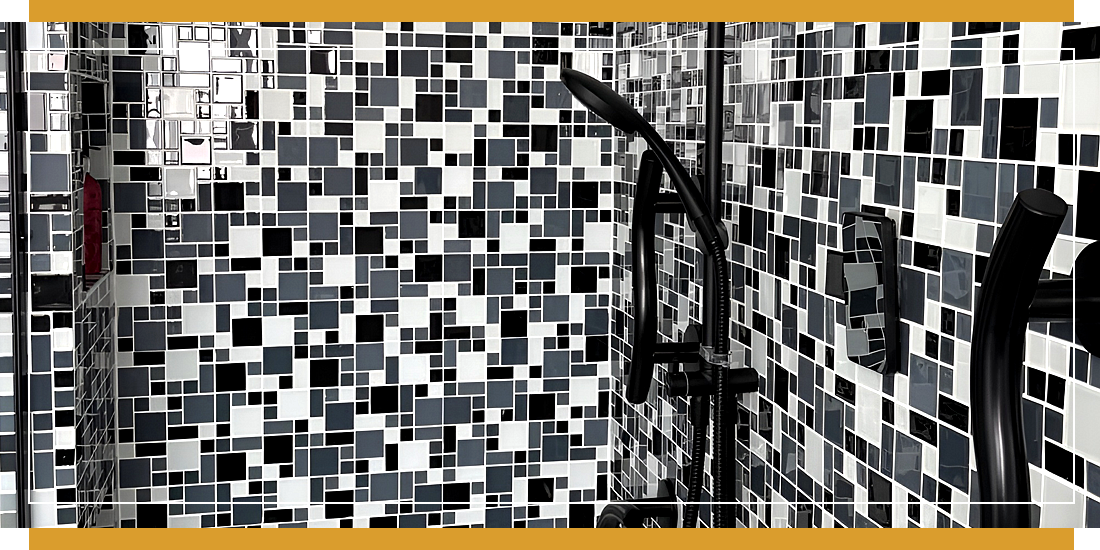
Slip resistance is one of the most important practical considerations when choosing mosaic tiles for a bathroom, particularly for floors, showers, and wet rooms. While mosaics can be a very good option in these areas, safety should never be assumed based on appearance alone.
Why Mosaics Can Work Well In Wet Areas
One of the main advantages of mosaic tiles on bathroom floors is the number of grout lines they create. These grout joints can improve traction underfoot, which is one of the reasons mosaics are so commonly used on shower floors and in wet areas.
This makes them especially useful where you want:
-
Better grip in regularly wet conditions
-
A tile that can adapt to floor falls or slopes
-
Practicality without losing visual detail
Grout Lines Help, But They’re Not The Whole Story
While extra grout lines can improve grip, they don’t automatically make every mosaic suitable for a wet floor. Slip resistance still depends on the tile itself, including what it’s made from and its slip rating.
For example, a highly polished mosaic may still be less suitable underfoot than a more textured option, even if both are in a small format.
Shower Floors Need Extra Care
Shower floors are where slip resistance matters most. Mosaics are often an excellent choice here because they combine practicality with flexibility, especially on sloped surfaces.
However, the product still needs to be intended for floor use in a wet environment. This is not something to guess and it should always be checked in the product specification.
Bathroom Safety Is About More Than Grip
Slip resistance is the main concern, but it’s not the only one. Bathroom mosaics also need to cope with:
-
Repeated moisture exposure
-
Regular cleaning
-
Barefoot use
-
The possibility of soap residue building up on the surface
A mosaic that is technically suitable for floors but awkward to keep clean or too slippery once coated with residue may not be the best bathroom choice in practice.
Our Tiling Experts Say:
“People often hear that mosaics are good for wet floors and stop there. In reality, they can be a great choice, but only when the material, finish, and rating all line up with how the bathroom will actually be used.”
How To Make Bathroom Mosaic Tiles Look Balanced
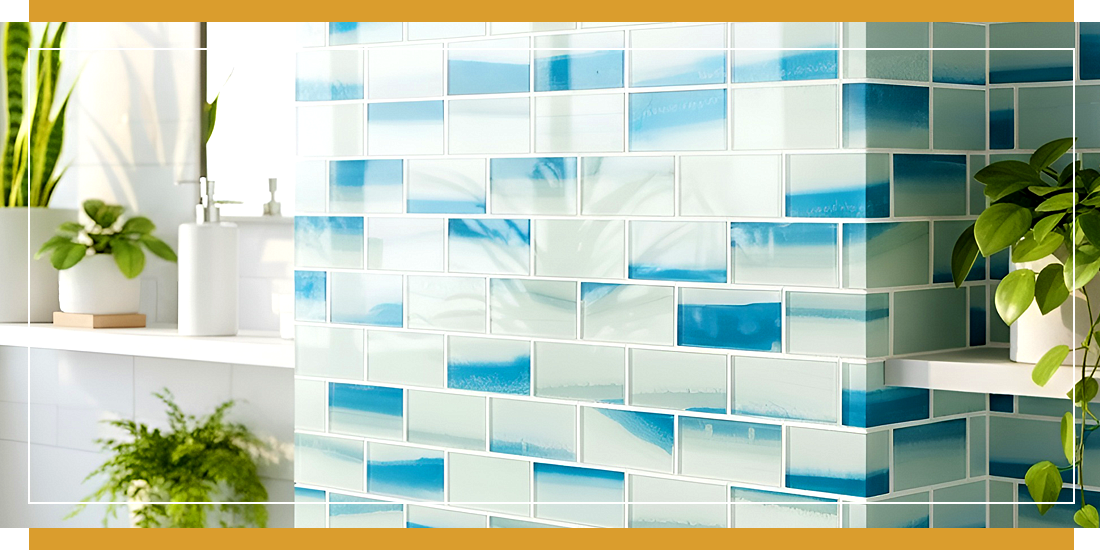
Mosaic tiles can add a huge amount of character to a bathroom, but because they naturally create more visual detail than larger tiles, balance matters. The goal is usually not to make mosaics the main event everywhere, but to use them in a way that adds interest without making the room feel crowded.
Use Detailed Mosaics In Defined Areas
One of the easiest ways to keep a bathroom scheme balanced is to use more decorative mosaics in specific zones rather than across every surface.
This often works well in places such as:
-
Shower niches
-
Splashbacks behind basins
-
Shower floors
-
Small feature sections
Using mosaics this way gives them room to stand out, while keeping the rest of the bathroom calm.
Related: Essential Guide to Wet Room Tiling
Pair Mosaics With Larger, Simpler Tiles
Mosaics often look their best when they’re used alongside larger-format tiles. Larger tiles create visual calm and continuity, while mosaics add texture, detail, and contrast.This combination helps stop the room from feeling too busy and makes the mosaic feel more intentional.
Keep The Surrounding Surfaces Calm
If the mosaic itself has strong pattern, colour variation, or contrast, it usually helps to keep the surrounding finishes more restrained. Plain walls, simple floor tiles, and a controlled colour palette allow the detail of the mosaic to do its job without competing with everything around it.
This is especially important in smaller bathrooms, where too many strong design elements can make the space feel visually cramped.
Think Carefully About Grout Colour
Grout has a big influence on how mosaic tiles look once installed. A matching grout creates a softer, more unified appearance, while a contrasting grout makes the pattern and tile shape stand out more strongly.
Neither is wrong, but in bathrooms where you want the design to feel calm and timeless, softer grout contrast often creates a more balanced result.
Match The Mosaic To The Size Of The Room
The smaller the bathroom, the more impact each detailed surface will have. In compact rooms, a small amount of mosaic can go a long way. Larger bathrooms give you more freedom to use mosaics more widely, but even then, repetition and contrast need to be handled carefully.
As a general rule, the more detailed the mosaic, the more controlled the placement should be.
Our Tiling Experts Say:
“The bathrooms that feel most successful usually have one clear focal point, not five. Mosaics work best when they’re given a job to do in the design, rather than being asked to do everything at once.”
Bathroom Mosaic Tile Maintenance And Cleaning
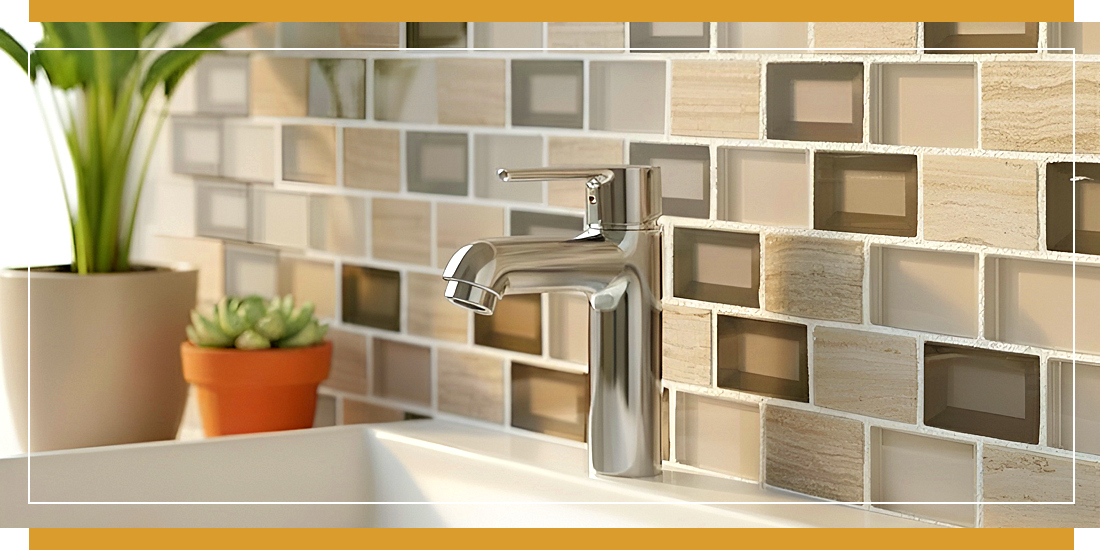
Bathroom mosaic tiles don’t usually require complicated upkeep, but they do need the right kind of maintenance for the environment they’re in. Bathrooms expose tiles to a particular combination of moisture, product residue, humidity, and regular cleaning, so the aim is not just to keep the surface looking clean, but to stop build-up from becoming a bigger problem over time.
Related: How to Clean Mosaic Tiles Without Damaging Them
Moisture Is Constant, Even When The Room Looks Dry
One of the main differences with bathroom mosaics is that they’re often exposed to moisture long after the room appears dry. Steam, condensation, splashes, and trapped humidity can all affect how residue settles on the tile and grout.
This is especially relevant in showers and wet rooms, as well as around baths and in areas near basins and vanity units. In these spaces, regular light maintenance tends to work much better than waiting for visible build-up to appear.
Soap Scum And Product Residue Are Often The Real Issue
In bathrooms, mosaics don’t usually get dirty in the same way kitchen tiles or floors do. The more common problem is a gradual build-up of things like:
-
Soap residue
-
Shampoo and conditioner splashes
-
Toothpaste marks
-
Hard water deposits
-
Product film on glossy surfaces
This is why bathroom mosaics can start to look dull even when they don’t look obviously dirty. In many cases, it’s not dirt at all, but residue that has built up over time.
Grout Often Shows Wear First
Because grout lines are more prominent with mosaics, grout is often the first part of the installation to show signs of bathroom wear.
In showers and high-moisture areas, this can mean you’ll see the grout darkening from trapped moisture, and over time there can be a buildup of soap or limescale settling into joints. You might also see mildew appearing in corners or less ventilated areas.
Keeping grout in good condition is one of the most important parts of keeping bathroom mosaics looking fresh overall.
Ventilation Matters More Than People Expect
Good bathroom maintenance isn’t only about what cleaner you use. It’s also about how quickly the room dries out afterwards.
Poor ventilation can lead to ongoing issues with:
-
Condensation
-
Mould or mildew
-
Persistent residue on tile surfaces
-
Damp-looking grout lines
Opening a window, using an extractor fan properly, or drying down heavily used shower areas can make a noticeable difference to how easy bathroom mosaics are to maintain.
Natural Materials Need More Attention In Bathrooms
Glass and ceramic mosaics are usually the easiest bathroom materials to look after. Stone and marble mosaics can still work beautifully in bathrooms, but they usually need more awareness around:
-
Sealing: Natural stone and marble mosaics are porous, so sealing helps protect them from absorbing moisture, residue, and staining over time.
-
Product choice: Using the wrong cleaner can damage sensitive surfaces, dull the finish, or affect the protective sealer.
-
Water exposure: Constant splashing, steam, and humidity can gradually affect more delicate mosaic materials if they’re not suited to heavily wet areas.
-
Residue build-up: Soap, shampoo, and hard water deposits can settle more easily on bathroom mosaics and grout, which can make the surface look dull or tired if left too long.
In other words, they are not necessarily difficult to maintain, but they are less forgiving if neglected.
A Little Maintenance Goes A Long Way
Bathroom mosaics usually stay looking their best when they’re maintained lightly and consistently. A quick wipe, drying down wet areas, and dealing with residue early often does more to preserve the finish than occasional heavy cleaning.
Our Tiling Experts Say:
“In bathrooms, the biggest maintenance issue is usually moisture and product residue building up gradually. The mosaics that stay looking best are usually the ones that get small amounts of regular attention, rather than occasional deep cleaning.”
5 Common Mistakes To Avoid With Bathroom Mosaic Tiles
Bathroom mosaic tiles can work beautifully, but there are a few common mistakes that can undermine the result. Most of them come from choosing mosaics purely by appearance, without thinking enough about how the bathroom will actually function day to day.
Mistake 1: Choosing The Wrong Mosaic For The Wrong Zone
Not every mosaic tile is suitable for every part of a bathroom. A tile that works well on a feature wall may not be right for a shower floor, and a decorative finish that looks beautiful in a dry area may not perform well in a heavily wet zone.
How to avoid it: Always choose mosaics according to the specific area they’ll be used in — for example, shower floor, shower wall, splashback, or feature section — rather than assuming one product will suit the whole room.
Mistake 2: Using Highly Decorative Mosaics Across Every Surface
Mosaics naturally create more visual detail than larger tiles, so using bold or intricate designs too widely can make a bathroom feel crowded, especially if the room is small.
How to avoid it: Use more decorative mosaics in defined areas such as niches, splashbacks, or feature panels, and balance them with calmer surrounding surfaces.
Mistake 3: Ignoring Slip Resistance On Floors
Bathroom floors, shower areas, and wet rooms need a more practical approach than walls. One of the most common mistakes is choosing a floor mosaic based mainly on appearance, without checking whether it is suitable and safe for wet underfoot use.
How to avoid it: Check product suitability, finish, and slip resistance before choosing mosaics for any bathroom floor or shower floor.
Mistake 4: Underestimating The Impact Of Grout
With mosaics, grout is a much bigger part of the finished look than it is with larger tiles. The wrong grout colour can completely change how the mosaic reads once installed.
How to avoid it: Choose grout alongside the tile, not afterwards. Think about whether you want the grout to blend in for a softer finish or stand out to emphasise the pattern.
Mistake 5: Overlooking Maintenance Requirements
Some bathroom mosaics are very easy to maintain, while others need more care. Stone and marble mosaics, for example, can look stunning in bathrooms, but they’re less forgiving if you don’t account for sealing, residue build-up, and gentle cleaning.
How to avoid it: Be realistic about the level of maintenance you’re happy to take on, and match the material to both the bathroom zone and your lifestyle.
Our Tiling Experts Say:
“The best bathroom mosaic projects usually start with the right practical questions. Once the tile suits the space properly, the design choices become much easier and the finished room tends to work better long term.”
Choosing Bathroom Mosaic Tiles With Confidence
Bathroom mosaic tiles can be one of the most effective ways to add texture, detail, and character to a space, but the best results usually come from choosing them with both design and practicality in mind.
The key is to think about the bathroom in zones. A shower floor, a splashback, a niche, and a feature wall may all be part of the same room, but they don’t all need the same type of mosaic. Once you match the material and finish to the way each area will be used, the design decisions become much easier.
In many bathrooms, mosaics work best when they’re used with purpose rather than everywhere at once. A well-placed section of mosaic tiling can often do more for the room than covering every surface, especially when it’s balanced with calmer surrounding finishes.
With the right material, thoughtful placement, and a clear understanding of how the room will function, bathroom mosaic tiles can be both beautiful and practical, and continue to feel right for many years to come.
FAQs About Bathroom Mosaic Tiles
Mosaic Village Is Rated 'Excellent'
 Don't just take our word for it. Hear what our customers have to say!